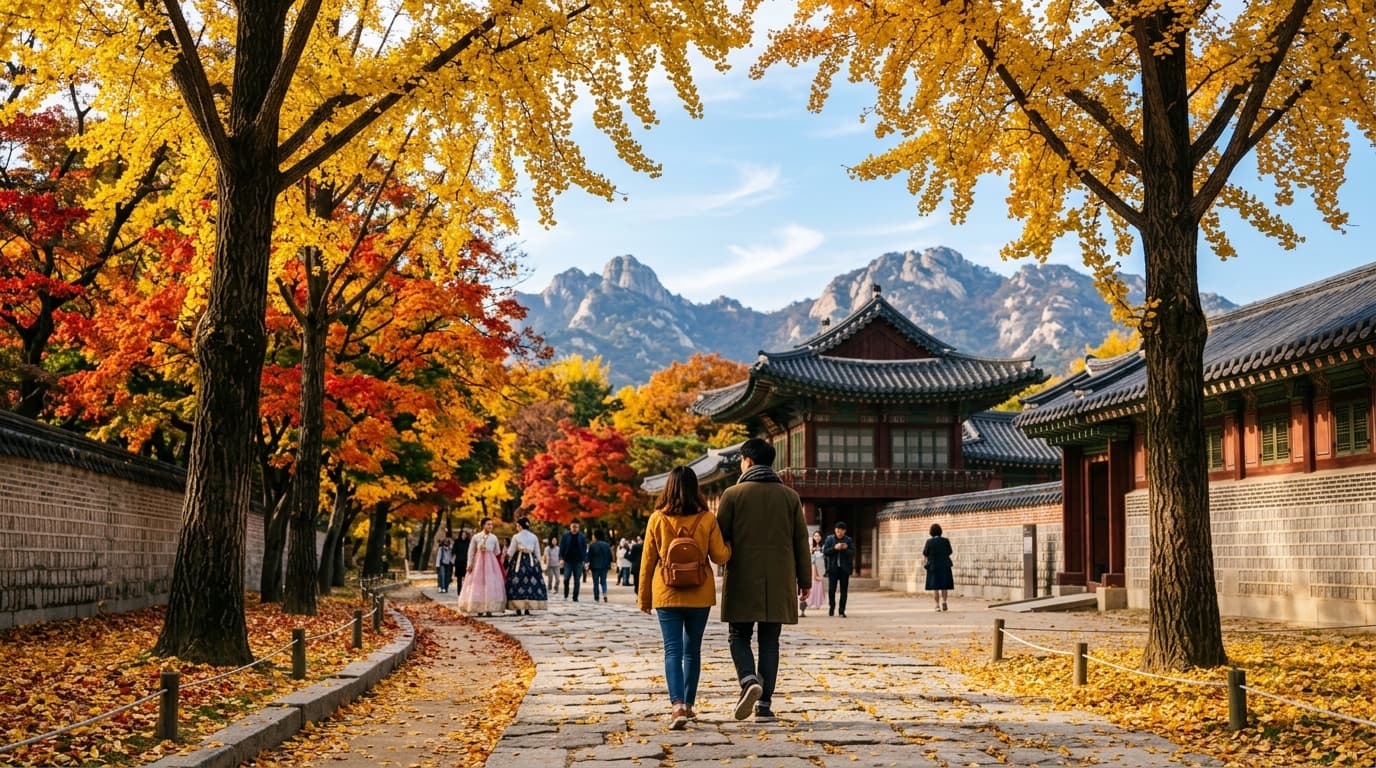

Quick Facts: Autumn Foliage in Korea 2026
| Item | Detail |
|---|---|
| Peak Season (Seoul) | ~Oct 20 – Nov 5, 2026 |
| Best Regions | Seoul, Gangwon (Seoraksan), Jeolla (Naejangsan) |
| Typical Duration | 1–7 days, depending on route |
| Must-See Trees | Maple, Ginkgo, Zelkova |
| Weather | 8–18°C (50–65°F), crisp, dry air |
| Language Barrier | High outside Seoul; ClassKim provides interpreter |
| Booking Tips | Reserve trains, hotels, and tours 2–3 months ahead |
| What’s Included | Itinerary advice, English chat, local bookings |
| Same-Day Options | Seoul palaces, Namsan, city parks |
Golden Maple Moments: How to See Korea's Autumn Foliage in 2026
Forget endless Google Maps scrolling—autumn in Korea is a real-life K-drama backdrop, and 2026 is shaping up to be one of the best years for clear skies and vibrant colors. Whether you dream of strolling under golden ginkgo trees in Seoul or hiking Seoraksan’s fiery ridges, this guide shows you exactly when, where, and how to catch the best autumn leaves—plus how ClassKim can take care of English-language bookings and same-day itinerary adjustments via WhatsApp.
1. What Is Korea’s Autumn Foliage Season Like?
- Timeline: The foliage season usually runs mid-October to early November, but 2026 forecasts (per Korea Meteorological Administration) predict peak colors in Seoul from October 20–November 5.
- What to Expect: Crisp air, bold reds and golds, local festivals, and a surge in domestic tourism—meaning trains, hotels, and tours get booked out fast.
- Classic Experience: Picture yourself at Gyeongbokgung Palace with a carpet of golden leaves or hiking the maple-lined paths of Naejangsan National Park (the BTS of autumn spots).
2. Step-by-Step: Planning Your 7-Day Autumn Foliage Itinerary
- Decide Your Dates (2–3 months ahead):
- Seoul: Oct 20–Nov 5, 2026
- Gangwon (Seoraksan): ~Oct 12–28, 2026
- Jeolla (Naejangsan): ~Oct 25–Nov 10, 2026
- Book Accommodation and Transport:
- Use ClassKim for English-friendly hotel and KTX bookings.
- Pick Your Foliage Hotspots:
- Day 1-2: Seoul city palaces, Namsan Park, Seoul Forest
- Day 3: Nami Island (easy day trip)
- Day 4-5: Seoraksan National Park (via Sokcho)
- Day 6: Naejangsan National Park (Jeolla)
- Day 7: Leisure day: Insadong, Bukchon Hanok Village
- Arrange Local Guides & Interpreters:
- Request ClassKim’s English interpreter for park tours or temple visits.
- Pack & Prep:
- Layered outfits, walking shoes, camera, T-money card.
- On-Site Support:
- Chat with ClassKim on WhatsApp for itinerary tweaks and local tips.
3. Best Regions & Routes for Autumn Leaves in 2026
Seoul (Urban Foliage, Easy Access)
- Gyeongbokgung & Changdeokgung Palaces:
- 2–3 hours, easy walks, stunning backdrops for photos.
- Namsan Park:
- 1–2 hours, panoramic city views framed by autumn colors.
- Seoul Forest & Olympic Park:
- Family-friendly, less crowded on weekdays.
Gangwon Province (Seoraksan National Park)
- Seoraksan:
- 1-night trip from Seoul (2.5 hours by bus/KTX + bus), best for dramatic mountain views and hiking.
- Sokcho:
- Seafood markets, overnight stays, English-friendly guesthouses.
Jeolla Province (Naejangsan National Park)
- Naejangsan:
- Famous for red maple tunnels, easy shuttle access from Jeongeup Station; best 1–2 day trip.
Nami Island (Gyeonggi-do)
- Nami Island:
- 1 hour from Seoul, iconic tree-lined paths, accessible for day-trippers.
4. What to Prepare: Docs, Language & Timing
- Documents:
- Passport, travel insurance, K-ETA (if required in 2026), proof of hotel bookings.
- Apps:
- Naver Map (for navigation), Papago (translation), ClassKim WhatsApp (for booking & support).
- Timing:
- Avoid weekends for major parks—domestic crowds can be intense.
- Start early (8–9 am) for uncrowded photos and cooler weather.
- Language:
- English signage is hit-or-miss outside Seoul; ClassKim’s interpreter service is a lifesaver for local buses, ticket counters, and hikes.
5. Honest Caveats: What to Watch Out For
- Crowds:
- Expect congestion at famous spots (especially weekends). Book hotels/train tickets early.
- Weather Variability:
- Early or late peaks possible; ClassKim can confirm updated forecasts closer to your dates.
- Last-Minute Changes:
- Trains and national park buses may sell out; flexible itinerary is key.
- Language Gaps:
- Outside central Seoul, English may not be understood—real-time support via ClassKim WhatsApp mitigates this.
6. Realistic Expectations: What You’ll Actually Experience
- Photos:
- Expect vibrant, Instagram-worthy scenery, but also lots of fellow travelers on main routes.
- Access:
- Most major foliage sites are accessible via public transport, but some require local buses or shuttles (timing is crucial).
- Food:
- Seasonal snacks (roasted sweet potatoes, hoddeok) available at parks and near palaces.
- Pace:
- 1–2 sites per day is realistic; don’t try to squeeze every hotspot in a single day.
7. Why Go With ClassKim? (Booking, Interpreter, Itinerary Perks)
- English-Speaking Support:
- On-site interpreters for hikes, palaces, and even local restaurants—so you’re never lost in translation.
- Same-Day Booking & Changes:
- Itinerary updates, rain-checks, and detours handled via WhatsApp.
- Local Know-How:
- Recommendations for hidden foliage spots, crowd-avoidance tips, and real-time weather updates.
- Stress-Free Planning:
- Book everything—hotels, trains, guides—in advance or on the go. One WhatsApp chat covers it all.
Want a smooth, English-friendly autumn trip? Message ClassKim on official WhatsApp for a tailored foliage itinerary, bookings, and your own interpreter.
8. Sample 3-Day Autumn Foliage Itinerary (Seoul & Nearby)
Day 1: Seoul Palaces & Namsan
- 9:00 am — Gyeongbokgung Palace (2 hours)
- 11:30 am — Bukchon Hanok Village (1 hour walk)
- 1:00 pm — Lunch in Insadong (English-friendly spots)
- 2:30 pm — Namsan Park walk, N Seoul Tower (2 hours)
Day 2: Nami Island Day Trip
- 8:00 am — ITX train from Yongsan, Nami Island ferry
- 10:00 am–3:00 pm — Explore Nami’s foliage paths, riverside cafes
- 5:00 pm — Return to Seoul
Day 3: Seoraksan or Naejangsan (Optional)
- Early KTX/bus, guided hike or cable car (ClassKim arranges local guide/interpreter)
- Return to Seoul by evening
Ready to lock in your autumn adventure? Chat now on official WhatsApp for a free trip consult, real-time English support, and stress-free bookings.
FAQ: Autumn Foliage Korea 2026
When is the best time to see autumn leaves in Korea 2026?
- Peak foliage is expected between October 20 and November 5 in Seoul, with mountain regions like Seoraksan peaking about a week earlier. Check with ClassKim for updated forecasts before booking.
Do I need to book trains and hotels in advance?
- Yes—autumn is one of Korea’s busiest travel seasons. Reserve your KTX, buses, and hotels 2–3 months in advance, especially for weekends and popular parks.
How do I get around if I don’t speak Korean?
- In Seoul, basic English is common, but signage and support drop off in rural areas. ClassKim provides real English interpreters and WhatsApp support to guide you at every step.
What should I pack for autumn in Korea?
- Layered clothing (mornings and evenings are cool), comfortable walking shoes, a power bank, and a good camera. Bring a T-money card for local transit.
Can I visit multiple foliage hotspots in one day?
- Most major spots like palaces and parks in Seoul can be combined in a single day, but destinations like Seoraksan or Naejangsan are best as day-trips or overnight stays.
Will I need a visa for Korea in 2026?
- Visa requirements depend on your nationality and any updates to Korean immigration policy. US, UK, and many other passport holders can enter visa-free, but check K-ETA rules before traveling.
How can ClassKim help with my autumn trip?
- ClassKim arranges all bookings, provides English-speaking interpreters, and helps you adjust your itinerary on the go—just message on official WhatsApp for a free consultation.