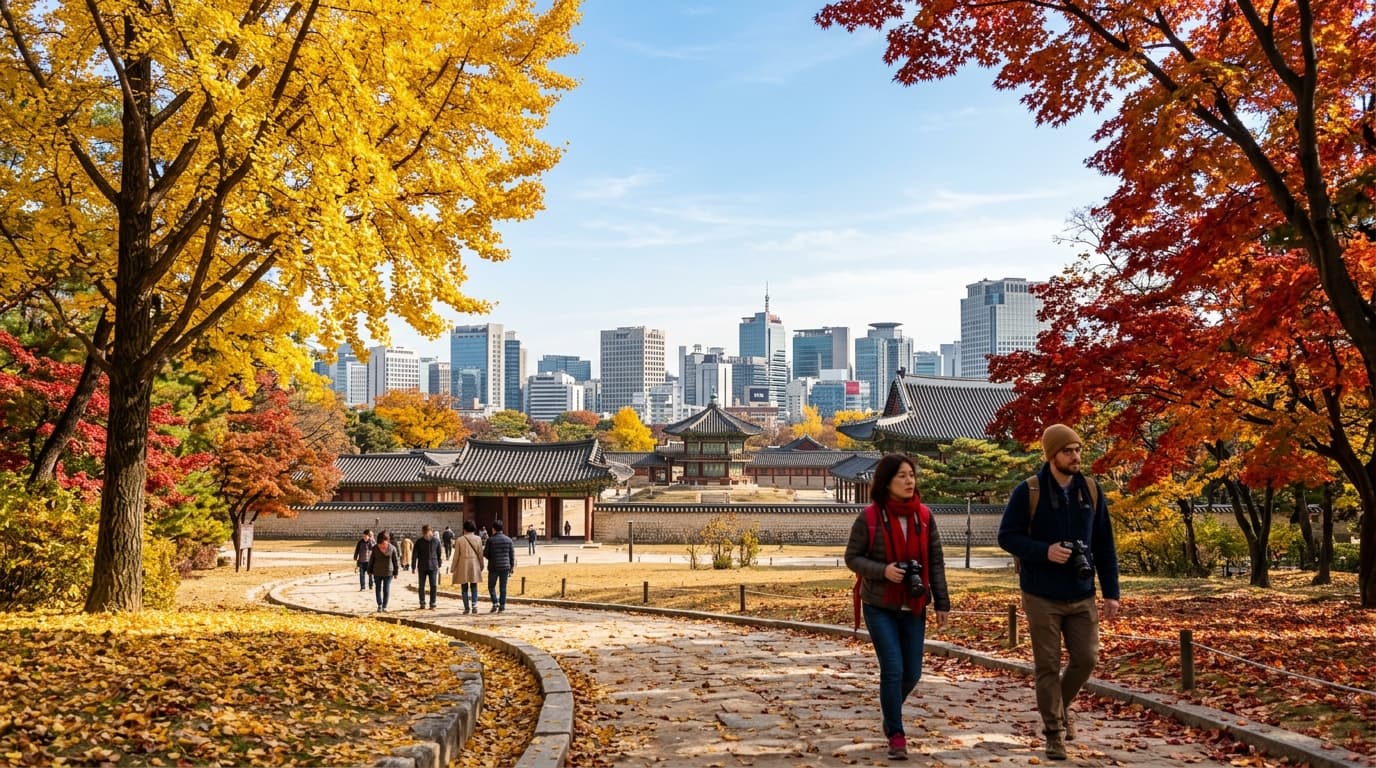

Quick Facts: Autumn Foliage in Korea 2026
| Item | Details |
|---|---|
| Peak Season | Late October – Early November (varies by region) |
| Duration | 1–2 hours (city parks) / 4–8 hours (national parks) |
| Must-See Spots | Namsan, Gyeongbokgung, Seoraksan, Naejangsan, Odaesan |
| Typical Hours | 08:00–18:00 (most parks/palaces) |
| Recommended Gear | Light jacket, camera, walking shoes, water, T-money card |
| Language Support | English interpreters via ClassKim on request |
| Booking Needed? | Yes (trains, guided tours, some palaces) |
| Same-Day Itinerary | Possible for Seoul, Incheon, and nearby mountains |
Where to See Autumn Foliage in Korea: 2026’s Best Spots
You want bold red maples and golden ginkgo — not just a few brown leaves. In 2026, the peak foliage period runs late October to early November, starting up north and in the mountains, then sweeping south. Here are the absolute must-visits, whether you’re in Seoul for one day or want a full hiking adventure:
1. Namsan Park (Seoul)
- Time needed: 1–2 hours
- Anchor: Walkable from Myeongdong shopping, classic city skyline views
- Why go: Ginkgo-lined paths, cityscape backdrops, easy to squeeze into your Seoul itinerary
2. Gyeongbokgung Palace (Seoul)
- Time needed: 1.5–2 hours
- Anchor: BTS visited for Run BTS episodes — traditional hanbok + golden leaves
- Why go: Historic palaces framed by bright foliage, especially photogenic in the mornings
3. Seoraksan National Park (Gangwon-do)
- Time needed: Full day (best as a day trip from Seoul)
- Anchor: K-drama filming site, dramatic mountain peaks
- Why go: Korea’s #1 for fiery red maples and rocky landscapes. Cable car available for non-hikers.
4. Naejangsan National Park (Jeolla-do)
- Time needed: Full day (possible overnight nearby)
- Anchor: Famous for tunnels of red maples, often featured in YouTube vlogs
- Why go: The ultimate autumn leaf tunnel shots. Often named Korea’s most beautiful autumn mountain.
5. Odaesan National Park (Gangwon-do)
- Time needed: 4–6 hours
- Anchor: Filming site for K-dramas and variety shows
- Why go: Quieter than Seoraksan, golden birch forests and wide trails
6. Hwadam Forest (Gyeonggi-do)
- Time needed: Half day
- Anchor: Instagram-famous for maple walkways and glass bridges
- Why go: Curated garden, accessible for families and non-hikers
Peak Foliage Timetable: When to Go in 2026
- Seoul & Northern Korea: Late October to early November
- Central Korea (Suwon, Daejeon, Odaesan): Late October
- Southern Korea (Gwangju, Naejangsan): Early to mid-November
Pro tip: The best colors last about 1–2 weeks at each location. Weekdays are less crowded, especially mornings (before 10:30am).
Step-by-Step Autumn Foliage Day — What to Expect
- Book in advance:
- For national parks, reserve train/bus tickets and (if desired) a guided tour. Message ClassKim on WhatsApp for help.
- For palaces or city parks, check opening hours — no need to pre-book, but some palaces require online reservation during peak weekends.
- Plan your route:
- City: Subway + short walk (Namsan, palaces, Hwadam Forest)
- National parks: Intercity bus/train + local shuttle or taxi
- Arrive and meet your interpreter (if booked):
- ClassKim can arrange English-speaking guides or interpreters at main locations — just request during booking.
- Enjoy the foliage:
- Take photos, explore trails, try local snacks (hotteok, roasted chestnuts)
- Return to city:
- Most spots have direct transport back to Seoul. Ask your interpreter or ClassKim for real-time help if needed.
- Same day: Shop, eat, or relax in Myeongdong (if you did a city spot).
What to Prepare: Essentials for Your Autumn Foliage Trip
- Clothing: Layered jacket, scarf, hat (mornings/evenings can dip below 10°C in late October)
- Shoes: Comfortable closed-toes for uneven paths
- T-money card: For seamless subway/bus rides
- Snacks & water: Especially for mountains
- Camera/phone: Power bank recommended
- Travel insurance: Always smart, especially for hiking
- English support: Book through ClassKim for on-the-spot interpreter help — super useful if you get lost or need local info
Honest Caveats: What to Watch Out For
- Crowds: Weekends and peak days (especially first Saturday of peak color) are packed — go early or on weekdays if possible.
- Weather: Rain can dull colors — check forecasts, and be flexible with your schedule.
- Transport: Some rural parks have limited shuttle buses; book return tickets in advance. National parks can be 2–4 hours from Seoul, so plan accordingly.
- Language barrier: English signs are limited outside Seoul; real-time interpreter support makes a difference.
- Accessibility: Not all trails are stroller- or wheelchair-friendly. Hwadam Forest and palace grounds are best for limited mobility.
Realistic Expectations: What You’ll Actually Experience
- City parks: You can see peak foliage and still shop or explore at night — Namsan, palaces, and Hwadam Forest are easy to combine with other activities.
- Mountains: Full-day commitment, but the payoff is dramatic — sweeping valleys of color, fresh air, and stunning views. Some hiking required, but cable cars are available at Seoraksan and Hwadam Forest.
- Photos: Colors are usually best before noon (less haze, softer light). Expect some crowds in iconic photo spots, but plenty of space for your own moment.
Why ClassKim Makes It Easier
- English interpreter available: Reserve a real English-speaking guide or interpreter, not just translated signs.
- Booking handled for you: Train, shuttle, palace tickets — all arranged, so you don’t stress about language or last-minute availability.
- Same-day itinerary planning: ClassKim can map out your foliage trip so you can hit Myeongdong or Hongdae the same day.
- Live support: Message us on WhatsApp if plans change, you get lost, or just want a snack recommendation nearby.
- Refund and reschedule: Flexible policies for weather or travel hiccups (just ask at booking).
Ready to catch Korea’s autumn leaves at their best? Message ClassKim on WhatsApp — we’ll arrange your trip, your interpreter, and even your city shopping after.
FAQ: Autumn Foliage in Korea 2026
- When is the best time to see autumn leaves in Korea in 2026?
- Peak foliage runs from late October to early November, starting in the north and mountains, then moving south. Seoul’s best colors are usually the last week of October and first days of November.
- Do I need to book tickets in advance for parks or palaces?
- For national parks (like Seoraksan, Naejangsan), booking train/bus tickets ahead is smart, especially on weekends. Some palaces now require online reservations during foliage season to manage crowds.
- Are English-speaking guides or interpreters available?
- Yes — ClassKim can arrange real English-speaking interpreters or guides for your trip. This is especially helpful outside Seoul, where English signage is limited.
- Can I do a foliage trip and still shop or eat in Seoul the same day?
- Absolutely! City parks like Namsan and palace grounds are 1–2 hour visits, so you can hit Myeongdong, Insadong, or Hongdae the same day.
- What should I wear for autumn foliage viewing?
- Layered clothing is key. Mornings/evenings can be chilly (under 10°C), but afternoons are mild. Comfortable shoes are a must for walking or hiking.
- What if it rains or I need to reschedule?
- ClassKim offers flexible rescheduling or refunds for bad weather or travel changes — just let us know as soon as possible via WhatsApp.
- How do I get real-time help if I get lost or need advice on site?
- Message ClassKim on WhatsApp! We provide live support, directions, and recommendations while you’re exploring.
Want a stress-free, fully supported autumn foliage day in Korea? Chat with ClassKim on WhatsApp — we’ll arrange booking, interpreter, and itinerary for you.