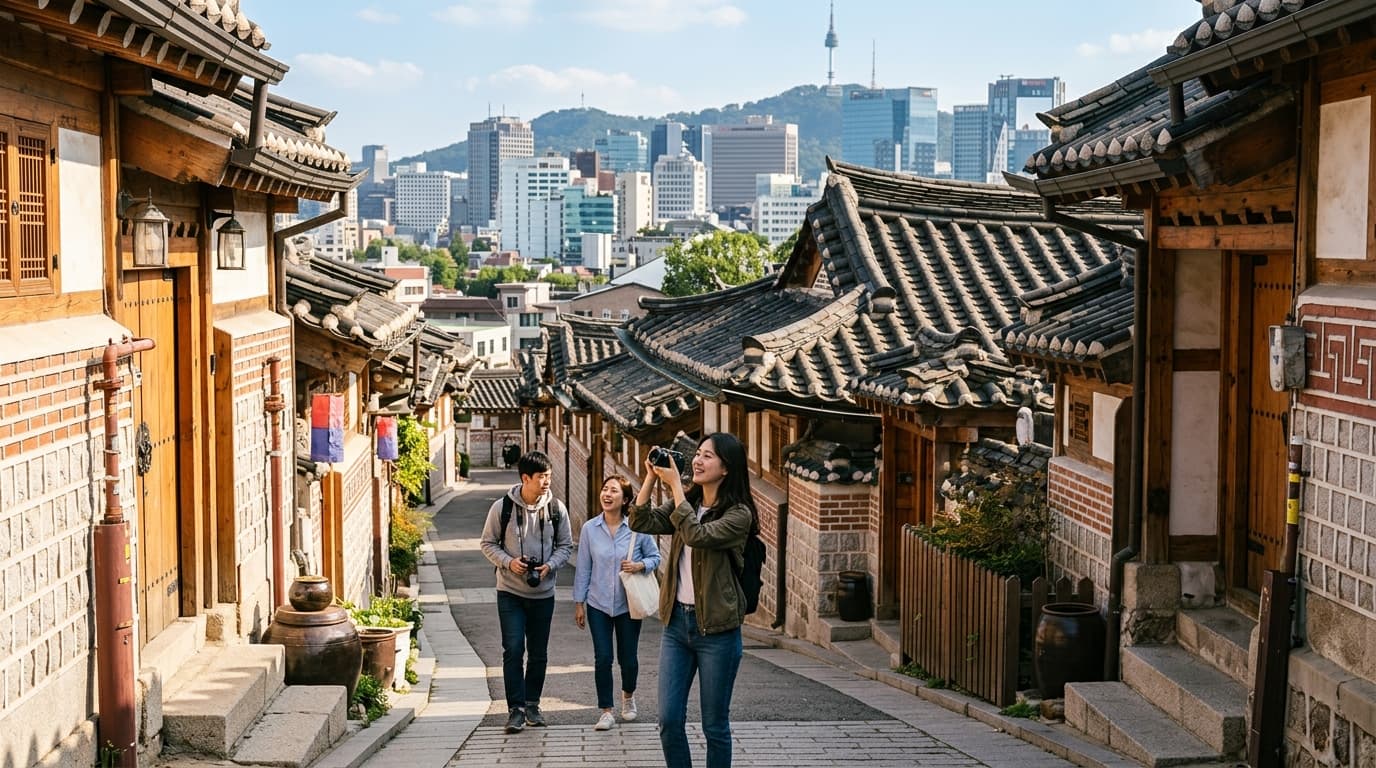

2 Hours, 100 Hanoks: Bukchon Hanok Village Guide for 2026 Travelers
You can experience Bukchon Hanok Village’s 100+ traditional Korean houses (hanoks), scenic alleys, and photo spots in under two hours—even on a packed 2026 Seoul trip. This guide covers the best walking routes, must-see sites, cultural etiquette, and booking tips, including how ClassKim arranges English-speaking guides, interpreter support, and hanok experiences (like tea tastings or crafts) so you’re never lost or confused.
Quick Facts: Bukchon Hanok Village for Visitors
| What | Details |
|---|---|
| Duration | 1–2 hours (self-guided); 2–3 hours (with experience) |
| Location | Jongno-gu, Seoul (between Gyeongbokgung & Changdeokgung) |
| Best time to visit | 10:00–17:00 (avoid early morning/evening for crowds) |
| Main highlights | Hanok alleys, photo spots, craft workshops, teahouses |
| English support | Yes (with pre-booked guides or ClassKim interpreter) |
| Booking needed? | Not for walking, but for workshops/experiences |
| Accessibility | Hilly, uneven alleys—wear comfy shoes |
| What’s included | Walking tour, optional hanok/tea/craft experiences |
| Nearby metro | Anguk Station (Line 3, Exit 2, 5-min walk) |
What Is Bukchon Hanok Village? The Living Hanok Neighborhood
Bukchon Hanok Village is Seoul’s most famous cluster of preserved hanok—traditional Korean houses with tiled roofs and elegant wooden frames. Unlike a museum or theme park, this is a real neighborhood where people still live, work, and create. The area sits on a hill between Gyeongbokgung and Changdeokgung Palaces, making it a natural stop on any Seoul itinerary.
- Over 100 hanoks, many dating back to the Joseon Dynasty
- Alleyways featured in K-dramas ("Personal Taste," "Goblin")
- Home to tea houses, craft studios, and art galleries
- Still a residential area—quiet etiquette is key
Step-by-Step: Your Bukchon Hanok Village Visit Timeline
Whether you want to just stroll or join a hanok experience (like a tea ceremony or craft class), here’s a typical flow for a 2026 visit:
Book in Advance (if needed):
- Walking is free; workshops (calligraphy, crafts, tea) require booking
- Message ClassKim on WhatsApp for help booking, interpreter support, or private guide
Arrive at Anguk Station (Line 3):
- Take Exit 2, walk 3–5 minutes north to the main Bukchon entrance
- Pick up a paper map at the Bukchon Information Center (English available)
Explore the Main Alleys:
- Follow Bukchon 8 Views walking route (approx. 1.5–2 hours, gentle pace)
- Snap photos at the famed "Bukchon Photo Spot" (by 11 Gahoe-dong)
- Detour to Gahoe-dong 31-gil for quieter hanok lanes
Optional Experience Session:
- Join a hanok tea tasting, craft class, or hanbok rental (pre-booked with English support)
- Interpreter can join for real-time translation—no awkward language barriers
Wrap Up & Explore Nearby:
- Grab lunch at a hanok cafe, then walk to Insadong (10 mins) or Gyeongbokgung (15 mins)
- If you book with ClassKim, we help coordinate your day so nothing overlaps
What to Prepare: Essentials for a Smooth Bukchon Visit
Bukchon’s beauty lies in its details, but a little prep goes a long way. Here’s what you’ll need:
- Comfortable walking shoes: The alleys are stone-paved and hilly
- Camera/phone: For iconic hanok shots (but respect privacy—no zooming into homes)
- Quiet voice & etiquette: Locals ask visitors to keep noise down, especially mornings
- ID or passport copy: For some workshops/hanbok rentals
- Booking confirmation (digital OK): For any ClassKim-arranged experience
- Cash or card: Cafes and shops mostly accept cards, but some small studios prefer cash
If you’re nervous about finding your way, tell ClassKim your itinerary—we’ll give door-to-door directions and interpreter backup if you want to join a class or tour.
Honest Caveats: Bukchon’s Beauty Comes With a Few Watch-Outs
No sugarcoating—Bukchon is stunning, but it’s not a theme park. Keep these in mind:
- Crowds: Peak times (weekends, 11am–3pm) can get busy, especially at photo spots
- Noise: Locals live here. Please skip loud group chats, music, or shouting
- Accessibility: Not stroller/wheelchair friendly—steep, narrow alleys
- Weather: No covered walkways; bring an umbrella in rainy season (June–July)
- Workshop language: Many classes are Korean-only unless arranged via a service like ClassKim; don’t expect fluent English everywhere
- No public bathrooms inside the village: Use ones at Anguk Station or nearby museums
Realistic Expectations: What You’ll Walk Away With
- Gorgeous photos: The tiled rooftops, narrow lanes, and hanok eaves are as photogenic as Instagram claims.
- A feel for traditional Korean life: You’ll see how Seoulites lived before high-rises took over.
- Hands-on crafts or tea: If you join a class, you’ll leave with a unique keepsake (like a hand-painted fan) or new appreciation for Korean tea.
- A sense of calm (if you go early): Early morning or late afternoon offers quiet, atmospheric walks.
But—don’t expect a fully immersive museum or actors in hanbok at every turn. This is a living neighborhood, so respect and low-key curiosity go a long way.
Why ClassKim? English Support & Seamless Bukchon Experience
You could wander Bukchon alone (it’s free!), but here’s how ClassKim makes it easier—especially if you want to go beyond selfies:
- English-speaking booking & interpretation: Book craft classes, guided tours, or tea tastings with real English interpreter support—not just Google Translate menus.
- Itinerary planning: We time your session so you can hit Myeongdong or Insadong in the same afternoon—no rushed overlaps.
- Clear directions: We send you a door-to-door route, including which station exit and where to meet your guide.
- Same-day support: Last-minute change or trouble finding the studio? Our team is one WhatsApp message away.
- Refund transparency: If a workshop cancels or weather intervenes, we handle refunds & rebooking directly—no language stress.
Want to book a hanok experience or make sure your Bukchon walk is hassle-free? Chat with ClassKim on WhatsApp for a free consult—just tell us your date and interests, and we’ll handle the rest (booking, interpreter, and itinerary).
2026: What’s New or Changed in Bukchon?
- More photo zones: The Seoul city government has added official photo spots (with English signage) since 2024.
- Noise curfews: Enforcement is stricter—no loud groups after 6pm.
- Hanok stays: A small number of hanoks now offer overnight stays (booked far in advance, English limited—ask ClassKim for help).
- Updated craft experiences: New workshops and pop-ups appear every season, from knotting to indigo dyeing—see what’s available when you visit.
- QR-coded walking trails: Downloadable English maps link to short video guides at major spots.
Sample 2-Hour Bukchon Hanok Village Itinerary
Here’s a realistic route for first-timers (map available from ClassKim):
- Start at Anguk Station Exit 2 (09:30–09:40)
- Bukchon Information Center: Grab map, quick intro (5–10 mins)
- Bukchon 8 Views Walk:
- View #1: Panoramic Hanok Rooftops
- View #3: Gahoe-dong 31-gil Alley (quiet photo spot)
- View #5: Hanok Tea House (rest, optional tea)
- View #7: Craft Studio (pre-booked class, 40–60 mins)
- End at Samcheong-dong Cafe Street: Lunch or coffee, then walk to Insadong or Gyeongbokgung
Total: ~2 hours. With ClassKim’s help, you can fit Myeongdong shopping or a palace tour in the same day.
FAQ: Bukchon Hanok Village for International Visitors
Is Bukchon Hanok Village free to enter? Yes, walking through the village and seeing the hanoks is 100% free. Only workshops, guided tours, or tea tastings require a booking and fee.
Can I enter the hanok houses? Most are private homes or businesses. Some art galleries, teahouses, and studios welcome visitors—look for signs or book ahead with English support.
Is English spoken in Bukchon? Staff at major info centers speak some English. For workshops or tours, use ClassKim to secure a real interpreter so nothing gets lost in translation.
Are there places to eat in Bukchon? Yes, you’ll find hanok cafes, dessert shops, and casual restaurants—most accept cards. For lunch/dinner, nearby Insadong and Samcheong-dong offer more options.
Can I wear hanbok in Bukchon? Absolutely. Hanbok rental shops are nearby, and it’s popular for photos. Reserve ahead if you want English service or custom fitting—ClassKim can arrange this.
How do I get to Bukchon from Myeongdong? Take Seoul Metro Line 4 from Myeongdong to Chungmuro, transfer to Line 3, and get off at Anguk Station (about 20 minutes). Take Exit 2—Bukchon is a 5-minute walk.
Do I need to book in advance for workshops? Highly recommended, especially in peak season or if you want English support. Same-day spots are often gone by noon. Message ClassKim for quick booking and interpreter help.
Ready for Your Hanok Adventure?
Bukchon Hanok Village is the Seoul experience you can’t fake—quiet alleys, tiled roofs, and the living rhythm of tradition. For a stress-free visit, seamless booking, and genuine English support (not just a translated pamphlet), chat with ClassKim on WhatsApp. We’ll arrange your walk, hanok experience, and interpreter so you can focus on making memories, not worrying about getting lost or stuck in translation.